
Mostrando entradas con la etiqueta Dickens. Mostrar todas las entradas

miércoles, 2 de marzo de 2016

Much Surprised / Sorprenderme demasiado

girls-puddle-swing
image

"I know enough of the world now to have almost lost the capacity of being much surprised by anything."
Charles Dickens  (1812-1870)


"Conozco el mundo lo bastante para haber perdido casi la facultad de sorprenderme demasiado por cualquier cosa."
Charles Dickens  (1812-1870)

miércoles, 8 de febrero de 2012

Wednesday Inspiration —10

Pasa el ratón por la imagen para ver la traducción.
(Hover over the picture to see Spanish translation.)
"It was the best of times, it was the worst of times, it was the age of wisdom, it was the age of foolishness, it was the epoch of belief, it was the epoch of incredulity, it was the season of Light, it was the season of Darkness, it was the spring of hope, it was the winter of despair, we had everything before us, we had nothing before us, we were all going direct to heaven, we were all going direct the other way."
— Charles Dickens, A Tale of Two Cities (1859)
"Era el mejor de los tiempos, era el peor de los tiempos, era la época de la sabiduría, era la época de la locura, era la época de las creencias, era la época de la incredulidad, era la estación de la luz, era la estación de las tinieblas, era la primavera de la esperanza, era el invierno de la desesperación, lo teníamos todo ante nosotros, no teníamos nada delante de nosotros, caminábamos derechos al cielo, e ibámos derechos en el sentido contrario." 
— Charles Dickens, Historia de Dos Ciudades (1859)

martes, 7 de febrero de 2012

¡Feliz 200 cumpleaños, Sr. Dickens!

Charles Dickens at 49
Photos credit

Hoy, hace doscientos años, nacía Charles John Huffam Dickens que llegaría a convertirse en un escritor universal que, aún hoy sigue vivo, y lo seguirá estando mientras lo leamos.
(Today, two hundred years ago, Charles John Huffam Dickens was born, the man who became a world famous writer, still alive as long as we keep on reading his books.)

¿Por qué deberíamos seguir leyendo a Dickens?
Podríamos contestar:
— Porque te enseña a pensar.
— Porque no sólo era hombre de su época sino de nuestra época también.
— Porque nos dice cosas sobre nosotros mismos retratando rasgos de personalidad y costumbres que nos resultan de lo más familiares.
— Sus mensajes sobre la pobreza y la caridad llevan décadas vigentes.
— Podemos aprender de las experiencias de sus personajes tan fácilmente como podemos aprender de nuestras propias experiencias.
(But why should we still read Dickens? We could answer: - Because he teaches you how to think. - Because he was not just a man of this own times, but a man of our times too. - Because he tells us things about ourselves by portraying personality traits and habits that might seem all too familiar. - Because his messages about poverty and charity have travelled through decades. - Because we can learn from the experiences of his characters almost as easily as we can learn from our own experiences.)

Como contestó una joven estudiante de quince años: "Tenemos que leer las novelas de Dickens porque nos dicen, del modo más sublime, por qué somos lo que somos."
(As a 15-year-old student answered: "We need to read Dickens's novels, because they tell us, in the grandest way possible, why we are what we are.")

Y, ¿qué somos nosotros? Somos Oliver Twist, siempre queriendo y pidiendo más. Somos Nicholas Nickleby, el hijo de un fallecido, convencido de que nuestro padre nos observa más allá de la tumba. Somos Esther Summerson, anhelando a una madre que nos abandonó hace años debido a circunstancias más allá de su control. Somos Pip enamorados de alguien fuera de nuestro alcance. Somos todos esos personajes, escritos de nuevo para otro tiempo y otro lugar.
(What are we? We are Oliver Twist, always wanting and asking for more. We are Nicholas Nickleby, the son of a dead man, incurably convinced that our father is watching us from beyond the grave. We are Esther Summerson, longing for a mother who had abandoned us long ago due to circumstances beyond her control. We are Pip in love with someone far beyond our reach. We are all of these characters, rewritten for another time and place.)

Por cierto si alguna vez pasáis por el condado de Kent, en el sureste de Inglaterra, podéis daros una vuelta por el parque de atracciones: El Mundo de Dickens.
(By the way, if you ever go to Kent, a county in South East England, you can go for a stroll in the amusement park, Dickens World.)
Fuente

martes, 17 de mayo de 2011

¿Qué dice nuestra firma?

What's in a signature?

Nuestra firma representa nuestra imagen pública, no nuestra personalidad real. Sin embargo, hay algunas pistas que pueden revelar partes de esa personalidad.

(Our signature represents our public image, what we want to show, not our actual personality. Nevertheless there are some clues which can reveal parts of that personality)

El nombre es el ego individual. Si es mayor que el apellido, esto sugiere que estamos orgullosos de nuestras propias dotes. Sin embargo, cuanto mayor sea el nombre, mayor es el deseo de resaltar nuestra importancia, y esto puede ser señal de baja auto-estima.

(The first name relates to individual ego. If the first name is larger than the family name, it suggests that we are proud of our own accomplishments. However, the larger the first name, the larger the desire to appear important and this can also indicate a low self-esteem.)
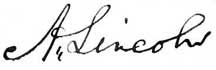
Abraham Lincoln Signature

El apellido muestra nuestro estatus social...nuestra imagen en sociedad. Si el apellido es mayor que el nombre, significa que siente un gran orgullo por los logros de la familia y su reputación, más que de nuestros propios éxitos.

(The family name projects social status...your image in society. If your family name is larger than your first name, you take great pride in family achievements and reputation, rather than in your own accomplishments.)

¿La firma es ilegible o clara?

(Is the signature is illegible or legible?)
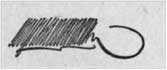
illegible signature

Una firma ilegible suele significar que el firmante tiende a ser cauteloso y reservado antes de conceder su confianza a los demás

(An illegible signature usually means that the writer tends to be cautious and reserved before placing his/her trust in others.)

Significado de la rúbrica

(Significance of your signature underscore)
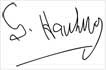
Stephen Hawking signature

Un simple raya recta bajo la firma subraya el nombre y demuestra fuerza de carácter, auto confianza e independencia.

(A simple straight line under the signature emphasizes the name of the writer and shows strength of character, self-confidence, and self reliance.)

Michael Jackson signature

Si la firma está encerrada en un círculo, la persona está intentando protegerse del mundo.

(If the signature is circled, the writer is trying to shield themselves from the world.)
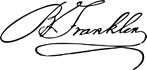
 Benjamin Franklin signature

Cuando el subrayado es vistoso y con floritura, demuestra que al firmante le encanta atraer la atención de los demás.

(When the underline is showy and a bit curly, it shows that the writer loves to seek attention.)
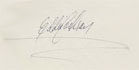
Eddie Cochran signature

Un zigzag debajo de la firma es un rasgo de incertidumbre ante sus propia capacidad. El lado derecho del zigzag muestra la confianza en sí, el izquierdo, incertidumbre. Cuanto mayor el zigzag, más inseguro se siente de su capacidad.

(A zigzag line under the signature reveals the trait of uncertainty in the writer's abilities. The rightwards part of the zigzag means self reliance, the left part shows the uncertainty. The longer the zigzag line, the unsure the writer is about his/her ability.)

¿Qué indica el tamaño de la firma?

(What does the Size of the Signature indicate?)

El tamaño de la firma con respecto al texto muestra el mayor o menor deseo de que los demás se fijen en uno.

(The size of the signature as compared to the handwriting mainly points out the writer’s wish to be noticed.)
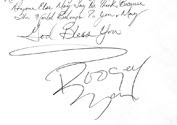
Boogey Man signature

Si es exageradamente grande, el escritor reclama ser reconocido y es muy audaz y seguro de sí mismo.

(If a signature is extremely large, it shows that the writer craves to be noticed, and is very bold and confident.)
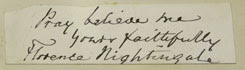
Florence Nightengale signature

La firma del mismo tamaño que el resto del escrito, muestra una persona equilibrada.

(Same size signature as the body of handwriting shows a well balanced person.)
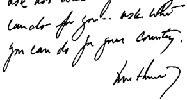
JFK signature

Una firma más pequeña, por el contrario, muestra el deseo de no llamar la atención.

(Smaller size signature indicates that the writer doesn't want to call attention.)

Evidentemente nuestra firma cambia a lo largo de los años, y si no, veamos la variedad de firmas que Charles Dickens utilizó a lo largo de su vida.

(Obviously our signature will change over the years. Let's see the variety of them that Charles Dickens used throughout his life.)

 
Arriba