Mostrando entradas con la etiqueta personajes. Mostrar todas las entradas

lunes, 11 de julio de 2011

Elogio a la amistad —2ª parte

As a young child my son Sam became enchanted with the Big Man... no surprise. To a child Clarence was a towering fairy tale figure, out of some very exotic storybook. He was a dreadlocked giant, with great hands and a deep mellifluous voice sugared with kindness and regard. And... to Sammy, who was just a little white boy, he was deeply and mysteriously black. In Sammy's eyes, "C" must have appeared as all of the African continent, shot through with American cool, rolled into one welcoming and loving figure.

Cuando era niño, mi hijo Sam quedó encantado con el Grandote ... no es de extrañar. Para un niño, Clarence era una figura imponente de cuento de hadas, de algún libro de cuentos muy exótico. Era un gigante con rastas, con las manos grandes y una voz profunda y melodiosa endulzada con amabilidad y consideración. Y ... para Sammy, que era un pequeño niño blanco, él era profunda y misteriosamente negro. A los ojos de Sammy, "C" debió de parecerle como la personificación del continente africano, con un toque de cool americano, y todo envuelto en una acogedora y cariñosa figura.

So... Sammy decided to pass on my work shirts and became fascinated by Clarence's suits and his royal robes. He declined a seat in dad's van and opted for "C's" stretch limousine, sitting by his side on the slow cruise to the show. He decided dinner in front of the hometown locker just wouldn't do, and he'd saunter up the hall and disappear into the Temple of Soul.

Así que ... Sammy decidió pasar de mi camisas de trabajo y se sintió fascinado por los trajes de Clarence y sus túnicas espléndidas. Rechazó un asiento en la camioneta de papá y optó por la limusina de "C", sentado a su lado en el lento paseo hacia el show. Decidió que cenar en frente de la taquilla del camerino simplemente no bastaba, y se alejó lentamente por el pasillo y desapareció en el Templo del Alma.

Of course, also enchanted was Sam's dad, from the first time I saw my pal striding out of the shadows of a half empty bar in Asbury Park, a path opening up before him; here comes my brother, here comes my sax man, my inspiration, my partner, my lifelong friend. Standing next to Clarence was like standing next to the baddest ass on the planet. You were proud, you were strong, you were excited and laughing with what might happen, with what together, you might be able to do. You felt like no matter what the day or the night brought, nothing was going to touch you.

Por supuesto, también estaba encantado el padre de Sam; desde la primera vez que vi a mi amigo saliendo de entre las sombras de un bar medio vacío en Asbury Park, abriendo camino ante él; ahí viene mi hermano, aquí viene mi hombre del saxo, mi inspiración, mi compañero, mi amigo de toda la vida. Estar junto a Clarence era como estar al lado del más duro del planeta. Estabas orgulloso, eras fuerte, te emocionaba y te reías con lo que podía suceder, con lo que juntos, podíais ser capaces de hacer. Te sentías como si fuera lo que fuese lo que el día o la noche te brindaran, nada te iba a pasar.

Clarence could be fragile but he also emanated power and safety, and in some funny way we became each other's protectors; I think perhaps I protected "C" from a world where it still wasn't so easy to be big and black. Racism was ever present and over the years together, we saw it. Clarence's celebrity and size did not make him immune.

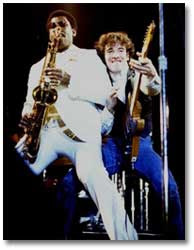
Springsteen and Clemons 1980FuenteSpringsteen and Clemons 2009Fuente

Clarence podía ser frágil, pero también emanaba de él poder y seguridad, y de alguna manera extraña nos convertimos en protectores uno del otro; creo que tal vez protegí a "C" de un mundo dónde todavía no era tan fácil ser grande y negro. El racismo estaba siempre presente y con los años juntos, lo hemos visto. La fama de Clarence y su tamaño no lo hacían inmune.

I think perhaps "C" protected me from a world where it wasn't always so easy to be an insecure, weird and skinny white boy either. But, standing together we were badass, on any given night, on our turf, some of the baddest asses on the planet. We were united, we were strong, we were righteous, we were unmovable, we were funny, we were corny as hell and as serious as death itself.

Creo que tal vez "C" me protegía también de un mundo donde no siempre era fácil ser un chico blanco inseguro, extraño y flaco. Pero, juntos éramos duros, en una noche cualquiera, en nuestro territorio, unos de los más duros del planeta. Estábamos unidos, éramos fuertes, éramos rectos, éramos inconmovibles, éramos divertidos, éramos unos sentimentales del demonio y tan serios como la muerte misma.

And we were coming to your town to shake you and to wake you up. Together, we told an older, richer story about the possibilities of friendship that transcended those I'd written in my songs and in my music. Clarence carried it in his heart. It was a story where the Scooter and the Big Man not only busted the city in half, but we kicked ass and remade the city, shaping it into the kind of place where our friendship would not be such an anomaly.

E íbamos a vuestra ciudad para zarandearos y despertaros. Juntos, contábamos una historia más antigua y más profunda sobre las posibilidades de la amistad que trascendía lo que yo había escrito en mis canciones y mi música. Clarence lo llevaba en su corazón. Era una historia en la que Scooter y el Grandote no sólo arrasaban la ciudad, sino que pateábamos culos y rehacíamos la ciudad, dándole la forma del tipo de lugar donde nuestra amistad no sería una anomalía.

And that... that's what I'm gonna miss. The chance to renew that vow and double down on that story on a nightly basis, because that is something, that is the thing that we did together... the two of us. Clarence was big, and he made me feel, and think, and love, and dream big. How big was the Big Man? Too fucking big to die. And that's just the facts. You can put it on his grave stone, you can tattoo it over your heart. Accept it... it's the New World.

Y eso ... eso es lo que voy a echar de menos. La oportunidad de renovar ese voto y arriesgarnos en esa historia todas las noches, porque eso es algo, eso es lo que hicimos juntos ... los dos juntos. Clarence era grande, y él me hizo sentir, y pensar, y amar, y soñar con grandes metas. ¿Cómo de grande era el Grandote? Demasiado grande para morir. Y eso sólo son los hechos. Pueden ponerlo en su lápida, podéis tatuároslo en el corazón. Aceptádlo ... es el Mundo Nuevo.

Clarence doesn't leave the E Street Band when he dies. He leaves when we die.

Clarence no se va de la E Street Band cuando muere. Se irá cuando nosotros muramos.

So, I'll miss my friend, his sax, the force of nature his sound was, his glory, his foolishness, his accomplishments, his face, his hands, his humor, his skin, his noise, his confusion, his power, his peace. But his love and his story, the story that he gave me, that he whispered in my ear, that he allowed me to tell... and that he gave to you... is gonna carry on.

Así que, voy a echar de menos a mi amigo, su saxo, la fuerza de la naturaleza que era su sonido, su gloria, su locura, sus logros, su rostro, sus manos, su humor, su piel, su ruido, su confusión, su poder, su paz. Pero su amor y su historia, la historia que me dio, que me susurró al oído, que me permitió contar ... y que os dio a vosotros ... va a seguir.

I'm no mystic, but the undertow, the mystery and power of Clarence and my friendship leads me to believe we must have stood together in other, older times, along other rivers, in other cities, in other fields, doing our modest version of god's work... work that's still unfinished.

No soy nada místico, pero la resaca, el misterio y el poder de Clarence y mi amistad me llevan a pensar que debemos de haber estado juntos en otras ocasiones, en otros tiempos, a lo largo de otros ríos, en otras ciudades, en otros campos, haciendo nuestra modesta versión de la obra de Dios ... trabajo que todavía está sin terminar.

So I won't say goodbye to my brother, I'll simply say, see you in the next life, further on up the road, where we will once again pick up that work, and get it done.

Así que no voy a decir adiós a mi hermano, simplemente voy a decir, nos vemos en la próxima vida, por la carretera, donde una vez más retomaremos el trabajo y lograremos acabarlo.

Big Man, thank you for your kindness, your strength, your dedication, your work, your story. Thanks for the miracle... and for letting a little white boy slip through the side door of the Temple of Soul.

Grandote, gracias por tu amabilidad, tu fuerza, tu dedicación, tu trabajo, tu historia. Gracias por el milagro ... y por permitir que un muchachito blanco se deslizara por la puerta lateral del Templo del Alma.

SO LADIES AND GENTLEMAN... ALWAYS LAST, BUT NEVER LEAST. LET'S HEAR IT FOR THE MASTER OF DISASTER, the BIG KAHUNA, the MAN WITH A PHD IN SAXUAL HEALING, the DUKE OF PADUCAH, the KING OF THE WORLD, LOOK OUT OBAMA! THE NEXT BLACK PRESIDENT OF THE UNITED STATES EVEN THOUGH HE'S DEAD... YOU WISH YOU COULD BE LIKE HIM BUT YOU CAN'T! LADIES AND GENTLEMEN, THE BIGGEST MAN YOU'VE EVER SEEN!... GIVE ME A C-L-A-R-E-N-C-E. WHAT'S THAT SPELL? CLARENCE! WHAT'S THAT SPELL? CLARENCE! WHAT'S THAT SPELL? CLARENCE! ... Amen.

ASÍ QUE, DAMAS Y CABALLEROS ... SIEMPRE EL ÚLTIMO PERO NO EL MENOS IMPORTANTE. OIGÁMOSLO PARA EL MAESTRO DE DESASTRE, EL GRAN BRUJO, EL HOMBRE CON UN DOCTORADO EN SANIDAD SAXUAL, EL DUQUE DE PADUCAH, EL REY DEL MUNDO, ¡CUIDADO OBAMA! EL PRÓXIMO PRESIDENTE NEGRO DE LOS ESTADOS UNIDOS A PESAR DE ESTAR MUERTO ... ¡OS GUSTARÍA SER COMO ÉL, PERO NO PODÉIS! ¡SEÑORAS Y SEÑORES, EL HOMBRE MÁS GRANDE QUE JAMÁS HAYAN VISTO! ... DÁDME UNA C-L-A-R-E-N-C-E. ¿QUÉ PALABRA ES ? CLARENCE! ¿QUÉ PALABRA? CLARENCE! ¿QUÉ PALABRA? CLARENCE! ... Amén.

I'm gonna leave you today with a quote from the Big Man himself, which he shared on the plane ride home from Buffalo, the last show of the last tour. As we celebrated in the front cabin congratulating one another and telling tales of the many epic shows, rocking nights and good times we'd shared, "C" sat quietly, taking it all in, then he raised his glass, smiled and said to all gathered, "This could be the start of something big."

Os voy a dejar hoy con una cita del Grandote mismo, que compartió en el viaje a casa en avión desde Búfalo, el último espectáculo de la última gira. Mientras lo celebrábamos felicitándonos unos a otros y contando historias de los muchos espectáculos excepcionales, las muchas noches de rock y los buenos momentos que habíamos compartido, "C" se sentó en silencio, escuchando, y luego levantó la copa, sonrió y dijo a todos los reunidos, "Esto podría ser el comienzo de algo grande".

Love you, "C"

Te quiero, "C"

Fuente

miércoles, 6 de julio de 2011

Elogio a la Amistad

La semana pasada, Bruce Springsteen publicó en su página una versión revisada del elogio que hizo de Clarence Clemons, su amigo, la semana anterior en su funeral. Es tal canto a la amistad que tengo que traducirlo para todos aquellos que no tienen la suerte de poder leer la versión original. Y como es tan largo, lo haré en dos partes.

(Last week, Bruce Springsteen published on his web site a revised version of the eulogy he delivered the week before for Clarence Clemons, his friend. It is such a moving hymn to friendship that I have to translate it for all those people who cannot read the original version. As it is quite long I have divided it in two parts.)

Antes de empezar, y para entender lo que Bruce Springsteen cuenta, hay que saber que, en la canción en la que reconoce que describe el nacimiento de la E Street Band, Tenth Avenue Freeze Out –título casi intraducible aunque podríamos interpretarlo como "El marginado de la Avenida Diez"—Bruce, en el primer verso se apoda a sí mismo Bad Scooter y a Clarence Clemons lo llama Big Man (grandote).

(Before starting, and to understand what Bruce Springsteen is talking about, we have to know that in the song that describes the birth of the E Street Band, Tenth Avenue Freeze Out –almost impenetrable title which we could interpreted as "The outsider of Tenth Avenue"—Bruce, in the first verse nicknames himself Bad Scooter and Clarence Clemons is called big man).

Born to run Session 1975

I've been sitting here listening to everyone talk about Clarence and staring at that photo of the two of us right there. It's a picture of Scooter and The Big Man, people who we were sometimes. As you can see in this particular photo, Clarence is admiring his muscles and I'm pretending to be nonchalant while leaning upon him. I leaned on Clarence a lot; I made a career out of it in some ways.

He estado sentado aquí escuchando a todos hablar de Clarence y mirando esa foto de nosotros dos allí. Es una imagen de Scooter y el Grandote, los que fuimos a veces. Como pueden ver en esta foto en particular, Clarence está admirando sus músculos y yo me hago el indiferente mientras me apoyo en él. Me he apoyado mucho en Clarence; he hecho una carrera de ello en algunos aspectos.

Those of us who shared Clarence's life, shared with him his love and his confusion. Though "C" mellowed with age, he was always a wild and unpredictable ride. Today I see his sons Nicky, Chuck, Christopher and Jarod sitting here and I see in them the reflection of a lot of C's qualities. I see his light, his darkness, his sweetness, his roughness, his gentleness, his anger, his brilliance, his handsomeness, and his goodness.

Aquellos de nosotros que hemos compartido la vida de Clarence, hemos compartido con él su amor y su confusión. A pesar de que "C" se ablandó con la edad, siempre fue apasionado e impredecible. Hoy veo a sus hijos Nicky, Chuck, Christopher y Jarod sentados aquí y veo en ellos el reflejo de un montón de cualidades de "C". Veo su luz, su oscuridad, su dulzura, su rudeza, su gentileza, su rabia, su brillantez, su hermosura y su bondad.

But, as you boys know your pop was a not a day at the beach. "C" lived a life where he did what he wanted to do and he let the chips, human and otherwise, fall where they may. Like a lot of us your pop was capable of great magic and also of making quite an amazing mess. This was just the nature of your daddy and my beautiful friend. Clarence's unconditional love, which was very real, came with a lot of conditions.

Pero, como sabéis vosotros muchachos, vuestro padre no era una persona fácil con la que convivir. "C" vivió una vida en la que él hizo lo que quería, afectara a quien o qué afectara. Al igual que muchos de nosotros, vuestro padre era capaz de ser fabuloso y a la vez armar unos líos tremendos. Esto fue sólo la forma de ser de vuestro padre y mi maravilloso amigo. El amor incondicional de Clarence, que era muy real, iba acompañado de un montón de condiciones.

Your pop was a major project and always a work in progress. "C" never approached anything linearly, life never proceeded in a straight line. He never went A... B.... C.... D. It was always A... J.... C.... Z... Q... I....! That was the way Clarence lived and made his way through the world. I know that can lead to a lot of confusion and hurt, but your father also carried a lot of love with him, and I know he loved each of you very very dearly.

Vuestro padre era un proyecto importante siempre en evolución. "C" nunca se acercaba a las cosas de forma lineal, la vida nunca transcurría en línea recta. Nunca fue A. .. B. ... C. ... D. ¡Siempre fue A. .. J. ... C. ... Z. .. P. .. I. ...! Esa fue la forma en que Clarence vivió e hizo su camino por el mundo. Sé que puede dar lugar a mucha confusión y dolor, pero vuestro padre también llevaba un montón de amor en él, y sé que él os quería mucho a todos y cada uno de vosotros.

It took a village to take care of Clarence Clemons. Tina, I'm so glad you're here. Thank you for taking care of my friend, for loving him. Victoria, you've been a loving, kind and caring wife to Clarence and you made a huge difference in his life at a time when the going was not always easy. To all of "C's" vast support network, names too numerous to mention, you know who you are and we thank you.

Muchos se preocuparon y cuidaron de Clarence Clemons. Tina, me alegro de que estés aquí. Gracias por cuidar de mi amigo, por amarle. Victoria, has sido una esposa cariñosa, amable y bondadosa para Clarence y tuviste una gran importancia en su vida en un momento en el que las cosas no eran fáciles. A todos los que han animado a "C", demasiadas personas para nombrarlas a todas, sabemos quiénes sois y os damos las gracias.

Your rewards await you at the pearly gates. My pal was a tough act but he brought things into your life that were unique and when he turned on that love light, it illuminated your world. I was lucky enough to stand in that light for almost 40 years, near Clarence's heart, in the Temple of Soul.

Vuestro premio os espera a las puertas del cielo. Mi amigo era irrepetible, él trajo cosas a vuestras vidas que eran únicas y cuando encendía la luz del amor, ésta iluminaba el mundo. Yo tuve la suerte de estar en esa luz durante casi 40 años, cerca del corazón de Clarence, en el Templo del Alma/Soul.

So a little bit of history: from the early days when Clarence and I traveled together, we'd pull up to the evening's lodgings and within minutes "C" would transform his room into a world of his own. Out came the colored scarves to be draped over the lamps, the scented candles, the incense, the patchouli oil, the herbs, the music, the day would be banished, entertainment would come and go, and Clarence the Shaman would reign and work his magic, night after night. Clarence's ability to enjoy Clarence was incredible.

Así que hagamos un poco de historia: desde los primeros días, cuando Clarence y yo viajábamos juntos, nos arrastrábamos a nuestras habitaciones por la noche y en cuestión de minutos "C" transformaba la suya en un mundo propio. Sacaba pañuelos de colores para cubrir las lámparas, velas aromáticas, incienso, aceite de pachulí, hierbas, música y el día era expulsado y el espectáculo empezaba, y Clarence el Chamán reinaba y hacía aparecer su magia, noche tras noche. La capacidad para disfrutar de Clarence era increíble.

By 69, he'd had a good run, because he'd already lived about 10 lives, 690 years in the life of an average man. Every night, in every place, the magic came flying out of C's suitcase. As soon as success allowed, his dressing room would take on the same trappings as his hotel room until a visit there was like a trip to a sovereign nation that had just struck huge oil reserves. "C" always knew how to live.

Big Man's dressing roomSpringsteen's dressing room

Hacia los 69 años, había recorrido un buen trecho, porque ya había vivido cerca de 10 vidas, 690 años en la vida de un hombre corriente. Cada noche, en todo lugar, la magia salía volando de la maleta de "C". Tan pronto como el éxito lo permitió, su camerino apareció con los mismos adornos que su habitación de hotel hasta el punto de que una visita allí era como visitar a una nación soberana que hubiera encontrado grandes reservas de petróleo. "C" siempre supo cómo vivir.

Long before Prince was out of his diapers, an air of raunchy mysticism ruled in the Big Man's world. I'd wander in from my dressing room, which contained several fine couches and some athletic lockers, and wonder what I was doing wrong! Somewhere along the way all of this was christened the Temple of Soul; and "C" presided smilingly over its secrets, and its pleasures. Being allowed admittance to the Temple's wonders was a lovely thing.

Mucho antes de que Prince dejara los pañales, un aire de misticismo provocativo gobernaba el mundo de Big Man. Yo me paseaba por mi camerino, que contenía unos cuantos sofás y unas taquillas, ¡y me preguntaba qué estaba haciendo mal! En algún momento todo esto fue bautizado como el Templo del Alma, y "C", presidida con una sonrisa sus secretos y sus placeres. Ser admitido en las maravillas del Templo era una cosa hermosa.

Continuará... si os gusta.

lunes, 20 de diciembre de 2010

El viaje de Palle Huld

Around the globe in 44 days

Cuando Palle Huld falleció el 26 de noviembre pasado, los periódicos –una semana después—titularon la noticia: "Muere Palle Huld, el reportero y actor que inspiró a Hergé para crear a Tintín" (El Mundo).

(When Palle Huld died on November 26, newspapers, a week after the news, titled "Danish Actor Said to Be Model for Tintin, Dies at 98" - The New York Times.)

Sin embargo, lo que me llamó la atención fue el que un chico de 15 años diera la vuelta al mundo solo.

(However, what struck me was the fact that a 15-year-old boy travelled around the world alone.)

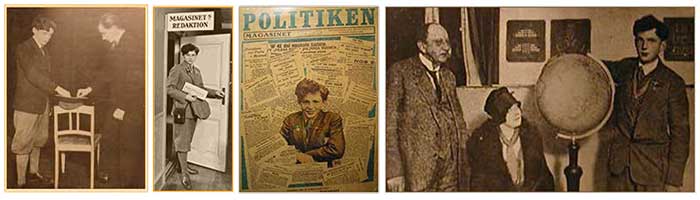
La aventura de Huld empezó la mañana del 24 de febrero de 1928, cuando trabajaba en F.Bulow &Co, una empresa de automóviles en el centro de Copenhague, donde había entrado de aprendiz. Un compañero le enseñó entusiasmado un ejemplar del periódico "Politiken" que buscaba a chicos de 15 años para viajar alrededor del mundo siguiendo los pasos de Phileas Fogg, en conmemoración del centenario del nacimiento de Julio Verne.

(Huld's adventure began on the morning of February 24, 1928, while he was working at F. Bulow & Co, an automobile firm in the centre of Copenhagen, where he entered as an apprentice. A colleague showed him enthusiastically a copy of Politiken newspaper which advertised for 15-year-old boys to travel around the world in Phileas Fogg's footsteps in commemoration of the 100-year anniversary of Jules Verne's birth.)

El concurso era sólo para adolescentes y el ganador debería dar la vuelta al mundo solo y tenía que hacerlo en 46 días, utilizando cualquier medio de transporte excepto el avión.

(The contest was open only to teenage boys; the winner would circle the globe unaccompanied; and he had to complete the trip within 46 days, using any conveyance but the airplane.)

Según su autobiografía, sentía que "Algo en mí tenía que intentarlo". Corrió a casa a por el permiso de sus padres que le requerían. Pero cuando entró en el edificio del "Politiken" se sorprendió al ver los otros 350 aspirantes que llenaban la escalera a la espera de la entrevista.

(According to Huld's autobiography, "Something in me had to try it." He rushed home for the required parental permission slip. But when he entered the Politiken building, he was shocked by the 350 other hopefuls who filled the staircase waiting to be seen.)

Entrevistaban a los chicos individualmente preguntándoles qué harían en situaciones difíciles. Cuando le preguntaron que como reaccionaría si se encontrara en China habiendo perdido todas sus pertenencias, un chico contestó que "Intentaría encontrar a un danés que me ayudara."

(The boys were interviewed individually about what they would do in difficult situations. When asked how he would react if he found himself in China having lost his entire belongings, one boy answered that he would ‘try to find a Dane somewhere to help me'.)

Palle starts his journey

Huld volvió a casa con sus incordiantes hermanas que aseguraban que Palle, "el niño de mamá", nunca sería elegido. Seguramente otros aspirantes – los estudiantes de secundaria de familias adineradas – fueran candidatos más adecuados que este aprendiz de pelo de zanahoria que no había completado su educación. Sin embargo, a su regreso a la oficina del "Politiken" más tarde ese día, Huld descubrió que era el elegido por el periódico.

(Huld returned home to his teasing sisters, who assured him that ‘mummy's boy Palle' would never be picked. Surely other contenders – high school students from wealthy backgrounds – were a more obvious candidate than this carrot-topped apprentice who had never completed his education? Yet on his return to the Politiken office later that day, Huld was the individual the newspaper chose.)

El tren de Palle salió de Copenhague el día 1 de marzo a las 8 de la mañana. A lo largo del camino al atravesar Dinamarca, multitud de gente enarbolaba banderitas y le ofrecían regalos para el viaje.

(Huld's train left Copenhagen at 8am on 1 March. All the way across Denmark crowds waved flags and offered small gifts for the voyage.)

Palle's journey around the world

Desde Copenhague, Huld tenía que cruzar Dinamarca hasta el puerto de Esbjerg, en la costa oeste de Jutlandia y luego viajar en barco a Inglaterra. Luego se dirigiría al norte de Escocia, para cruzar el Atlántico hasta Canadá, que cruzaría en tren antes de partir a Japón. La ruta le llevaría a través de Asia sudoriental, y a continuación, por el Ferrocarril Transiberiano por toda la Unión Soviética hasta Moscú, desde donde viajaría a través de Polonia a Alemania antes de regresar a Dinamarca.

(From Copenhagen, Huld was to cross Denmark to the port of Esbjerg on Jutland's west coast and then travel by boat to England. He would then head north to Scotland, crossing the Atlantic into Canada, which he would traverse by train before sailing to Japan. The route would then take him through south-east Asia, then by the Trans-Siberian Railway across the Soviet Union to Moscow, from where he would travel via Poland to Germany before returning home to Denmark.)

Palle in Manchuria

Lo que el "Politiken" no admitiría ante Huld ni ante sus lectores era su preocupación por la región de Manchuria devastada por la guerra, ahora convertida en una región de China. En 1928, Manchuria estaba en medio de una lucha entre las fuerzas soviéticas y los japoneses, que estaban tratando de poner un pie en China.

(What Politiken didn't admit to either Huld or their readers was their concern about the war-torn region of Manchuria, now a region in north-east China. In 1928, Manchuria was in the midst of a power struggle between Soviet forces and the Japanese, who were attempting to gain a foothold in China.)

El periódico pudo respirar tranquilo cuando Huld dejó Manchuria sano y salvo. Casi arruina todo el viaje en Canadá, sin embargo, cuando perdió el tren después de un viaje improvisado a San Juan para impresionar a una joven que había conocido en el barco. Sin embargo al final consiguió llegar a Montreal en un tren especial utilizado por los emigrantes.

(The paper could breathe a sigh of relief when Huld left Manchuria unscathed. He almost ruined the whole trip in Canada though, missing the cross country train after an impromptu tour of St. John to impress a young girl he had met on the boat. However he managed to reach Montreal on a special train used by emigrants.)

Palle meeting people

Cruzar el mundo en sólo 46 días sin utilizar el avión significaba que Huld no podía quedarse mucho tiempo en ningún país. Pero en sólo 48 horas, Japón logró dejarlo con una impresión duradera. El joven era una novedad en el Lejano Oriente, aunque esto tenía menos que ver con su viaje como con su pelo rojo.

(Crossing the world in just 46 days without the use of aircraft meant that Huld could not stop in any country for long. But in only 48 hours, Japan managed to leave him with a lasting impression. He was a novelty in the Far East, although this had less to do with his journey than with his red hair.)

Palle in Moscow

En Moscú fue dónde Huld se llevó el mayor susto del viaje. Llegó temprano y nadie salió a su encuentro por lo que decidió tratar de localizar el consulado danés por sí mismo. Después de una larga vuelta por la ciudad en carruaje de caballos, se había perdido irremediablemente. Al ver un Hotel Europa, le preguntó al personal de recepción que llamó por teléfono al consulado para enviar a alguien a su encuentro. Huld había tenido suerte. Los extranjeros en Moscú en ese momento podían ser fácilmente detenidos simplemente por dar un paseo sin escolta.

(Moscow gave Huld his biggest scare of the trip. He arrived early with no-one to meet him, and decided to try to locate the Danish consulate himself. After a lengthy tour of the city by horse-drawn cab, he was hopelessly lost. Noticing a Hotel Europa, he asked the reception staff who telephoned the consulate to send someone out to meet him. Huld had been lucky. Foreigners in Moscow at that time could easily be arrested simply for taking a walk without an escort.)

El viaje de Huld acabó bien, tras 44 días –dos menos de los previstos—para alivio de su madre a la que habían recetado pastillas para dormir. Con 20.000 personas esperando para darle la bienvenida, el viaje acabó con Huld a hombros de dos fornidos policías que se abrieron paso entre la multitud para llevarlo hacia donde lo esperaba su familia.

(Huld's trip ended safely after 44 days –two less than planned—much to the relief of his mother who had been prescribed sleeping tablets for the duration. With 20,000 people waiting to greet him on his return, Huld's journey ended on the shoulders of two burly policemen who pushed their way through the crowd to his waiting family.)

Para Huld, esta aventura sólo fue el comienzo de una vida dedicada al público. De 1933 al año 2000 disfrutó de una larga carrera de actor en Dinamarca, actuando sobre el escenario del Teatro Real Danés y protagonizando unas 40 películas.

(For Huld, this adventure was only the beginning of a life spent in the public eye. From 1933 to 2000 he enjoyed a lengthy acting career in Denmark, performing with the Royal Danish Theatre and appearing in 40 movies.)

Palle Huld's book

Huld describió su aventura en un libro titulado "La vuelta al mundo en 44 días" que apareció en 1930 en español y fue traducido a 11 idiomas.

(Huld wrote a book about his adventures which was published in 11 languages and appeared in English as "A Boy Scout Around the World" in 1929).

Que Hergé se inspirara en él para su personaje de Tintín es lo menos interesante de todo esto, a mi juicio. Ojalá pudiera encontrar el libro para leer este periplo.

(If Hergé was inspired by Huld to create his character Tintin is the least interesting thing of all, in my opinion. I wish I could find the book to read through this journey.)

Fuente: The Copenhagen Post

martes, 28 de septiembre de 2010

Mark Zuckerberg y su fundación "Startup:Education"

Mark Suckerberg and Startup:Education Foundation

Mark Zuckerberg, fundador y presidente de la red social Facebook, ha anunciado la creación de Startup: Education (Inicio: educación), una fundación benéfica para "mejorar las oportunidades educativas de los jóvenes en estados Unidos." El primer proyecto es la donación de 100 millones de dólares en apoyo al sistema de escuelas públicas de la ciudad de Newark, Nueva Jersey.

(Mark Zuckerberg, founder and CEO (Chief Executive Officer) of the social networking site Facebook, has announced the creation of "Startup: Education" a charitable foundation to "improve educational opportunities for young people in America." Its first project is a $100 million donation to support the public school system in the city of Newark, N.J.)

Seguir leyendo...

Facebook around the world

A sus 26 años es la 35ª fortuna de Estados Unidos (con 6.900 millones de dólares según la revista Forbes de agosto pasado). Creció en el condado de Westchester y reside habitualmente en Palo Alto, California. No tiene ninguna conexión personal con Newark pero en una nota en su página de Facebook explica los motivos que le han impulsado a crear esta fundación.

(At 26 of age he is the 35th-richest American (with an estimated fortune of 6.9 billion according to Forbes magazine in its last August edition). He grew up in Westchester County, New York, and currently resides in Palo Alto, California. He has no personal connection to Newark but in his page of Facebook he explains the reasons why he has decided to create such foundation.)

Education has always been important to me and my family. Growing up, my parents emphasized the importance of learning and academic success. They both worked to make sure my three sisters and I could all go to good colleges. My grandmother was a teacher, and when my girlfriend graduated from college she became a teacher as well.

La educación siempre ha sido importante para mí y mi familia. Al crecer, mis padres hicieron hincapié en la importancia del aprendizaje y del éxito académico. Ambos trabajaron para asegurarse de que mis tres hermanas y yo podríamos ir a buenas universidades. Mi abuela era maestra, y cuando mi novia se graduó en la universidad, se convirtió en maestra también.

I feel very fortunate for the opportunities I've been given because of my education, including the chance to work with talented people and build a great company at such a young age. Rather than waiting until later in life to focus on giving back, I've spent a lot of the last year researching and looking for the most impactful ways to improve education starting in America.

Me siento muy afortunado por las oportunidades que me han dado por mi educación, incluyendo la oportunidad de trabajar con gente con talento y construir una gran empresa a una edad tan joven. En lugar de esperar para devolver lo brindado, he pasado mucho tiempo el año pasado investigando y buscando las formas más impactantes de mejorar la educación en Estados Unidos.

There are many different challenges all facing education at once. Teaching needs to be more respected and revered as a career. School districts need more autonomy and clearer leadership so they can be managed more like startups than like government bureaucracies. And outside the classroom, we need to support students' interests, give them a safe environment to grow up in, and keep everyone healthy.

Hay muchos retos diferentes a los que se enfrenta la educación ahora mismo. La enseñanza necesita ser más respetada y venerada como carrera. Los distritos escolares necesitan más autonomía y un liderazgo más claro para poder ser administrados más como nuevas empresas que burocracias del gobierno. Y fuera del aula, tenemos que apoyar los intereses de los estudiantes, darles un ambiente seguro donde crecer, y mantenerlos a todos saludables.

Many people are working on solving a single part of the problem broadly across the whole country. But recently, a few leaders are getting significant results by taking more of a startup approach and moving fast to do all these things at the same time in just one city. If they can prove that it's possible to turn around some of the most difficult urban districts in the country, then that will generate enough momentum to take the same approach and improve education everywhere.

Mucha gente está trabajando en la solución de una sola parte del problema en todo el país. Pero recientemente, algunos líderes están obteniendo resultados importantes con un enfoque más empresarial y actuando con celeridad para resolver todos los problemas a la vez en sólo una ciudad. Si pueden demostrar que es posible darle la vuelta a algunos de los distritos urbanos más difíciles del país, entonces se generará el impulso suficiente para adoptar el mismo enfoque y mejorar la educación en todas partes.

Like any startup, the key to making this work is finding great leaders and the right market that's ready for change. After a lot of research, I've decided to put my full support behind Newark Mayor Cory Booker and New Jersey Governor Chris Christie to help their efforts to reform the schools in Newark.

Como cualquier empresa incipiente, la clave para hacer este trabajo es encontrar a los grandes líderes y el mercado adecuado listo para el cambio. Después de mucha investigación, he decidido brindar mi total apoyo al alcalde de Newark Cory Booker y gobernador de Nueva Jersey, Chris Christie para ayudarles en sus esfuerzos por reformar las escuelas en Newark.

Newark has unfortunately become a symbol of public education's failure—of a status quo that accepts schools that don't succeed. In 2009, only 40 percent of kids could read and write at grade level by the end of third grade, only 54 percent of high school students graduated and just 38 percent enrolled in college.

Newark desgraciadamente se ha convertido en un símbolo del fracaso de la educación pública—un estado de cosas que acepta que las escuelas no tengan éxito. En el año 2009, sólo el 40 % de los niños sabían leer y escribir al nivel de su clase a finales de tercero de Primaria, sólo el 54 % de los estudiantes de secundaria acabaron sus estudios y sólo el 38 % se matriculó en la universidad.

Going to a school with boarded up windows and broken glass should not be a part of our education experience. A child's biggest fear at school should be their next exam, not weapons or the kid sitting next to them.

Ir a una escuela con ventanas tapiadas y ventanas rotas no debería formar parte de nuestra experiencia educativa. El mayor temor de un niño en la escuela debe ser su próximo examen, no las armas o el chico sentado a su lado.

Booker-Zuckerberg_Christie
Mayor Cory Booker (left), Mark Zuckerberg (center) and Governor Chris Christie (right)

Over the past several months, I've learned a lot about these challenges from Cory Booker and Chris Christie. Each of these leaders is prepared to make bold commitments to challenge the status quo and make Newark a symbol of education reform. Their personal commitments—and their willingness to cut through the politics and red tape to collaborate—persuaded me to support them and make a commitment of my own.

En los últimos meses, he aprendido mucho sobre estos problemas con Cory Booker y Chris Christie. Cada uno de estos líderes está dispuesto a asumir compromisos audaces para desafiar el status quo y hacer de Newark un símbolo de la reforma educativa. Su compromiso personal—y su voluntad de abrirse camino a través de la política y de la burocracia para colaborar—me convencieron para apoyarles y adquirir un compromiso por mi parte.

As a first step, the Governor has authorized Mayor Booker to work with the local community to develop and implement a comprehensive education plan for the Newark Public School District, based on clear standards and metrics that reward excellence in teaching, school leadership and student achievement. The plan will be carried out under the Mayor's leadership, through a new superintendent selected jointly by the Governor and the Mayor. This commitment—a Republican governor giving new leverage to a Democratic mayor—shows that the challenge is not a partisan or political issue. That's very important to me. My focus is not on politics, it's on improving education.

Como primer paso, el Gobernador ha autorizado el alcalde Booker para que trabajara con la comunidad local en el desarrollo y ejecución de un plan global de educación para las escuelas públicas de Newark, basado en niveles de calidad claros y baremos que recompensen la excelencia en la enseñanza, la dirección escolar y el rendimiento estudiantil. El plan se llevará a cabo bajo la dirección de la alcaldía, a través de un nuevo supervisor seleccionado conjuntamente por el gobernador y el alcalde. Este compromiso—un gobernador republicano que apoya a un nuevo alcalde demócrata—muestra que el desafío no es un tema partidista o político. Eso es muy importante para mí. Mi interés principal no está en la política, sino en la mejora de la educación.

Mayor Booker has committed to make education his single highest priority for his current term in office. He will provide the same oversight over education in the next four years that he has in his efforts to reduce crime in Newark during his first term. The Mayor will work with the citizens of Newark to establish new community metrics to measure the performance of students, teachers and principals. His goal is to build a community that delivers greater recognition and rewards for excellence.

El alcalde Booker se ha comprometido a hacer de la educación su mayor prioridad en su actual mandato en el cargo. Pondrá el mismo interés en la educación en los próximos cuatro años como esfuerzo ha dedicado para reducir el crimen en Newark durante su primer mandato. El alcalde trabajará con los ciudadanos de Newark para establecer nuevos baremos de la comunidad para medir los resultados de los estudiantes, de los maestros y de los directores. Su objetivo es construir una comunidad que brinde mayor reconocimiento a la excelencia y la premie.

I believe in the Mayor and his vision, and that's why I want to help them succeed. Using my own Facebook stock, I'm creating the Startup: Education foundation with over $100 million to invest in educating and improving the lives of young people. I'm also challenging others who want to improve education in America to match my contributions.

Creo en el alcalde y su visión, y por eso quiero ayudarles a tener éxito. Con mis acciones personales de Facebook, he creado la fundación Inicio: Educación con más de 100 millones de dólares para invertir en la educación y la mejora de la vida de los jóvenes. También reto a otros que quieran mejorar la educación en los Estados Unidos para que contribuyan con sus aportaciones.

I'm excited to start this new project. I've been very lucky to have the education and opportunities I've had in my life and I look forwarding to participating in giving the 40,000+ students in Newark the same opportunities. Together, we can support a bold and thoughtful program for improving education, starting by making Newark a symbol of excellence.

Estoy emocionado de iniciar este nuevo proyecto. He sido muy afortunado de tener la educación y las oportunidades que he tenido en la vida y espero poder participar en dar a los más de 40.000 estudiantes de Newark las mismas oportunidades. Juntos, podemos apoyar un programa audaz y serio para mejorar la educación, empezando por convertir Newark en un símbolo de excelencia.

Quizá como hay ya quien dice sea sólo un gesto publicitario, pero francamente, ojalá las grandes fortunas tuvieran muchos gestos como estos.

(Perhaps, as some people already say, it is a calculated move, but, frankly, I wish great fortunes could make many moves like that one.)

Aquí os dejo un corto vídeo subtitulado en inglés y en español sobre este chico.

(Here is a short video with subtitles in English and Spanish about this boy.)

miércoles, 30 de junio de 2010

Ohiyesa, el Dr. Charles A. Eastman

Ohiyesa, Dr. Charles A. Eastman

Education is the path of the modern warrior
(La educación es el camino del guerrero moderno)
Jacob Eastman (Tawakanhdeota – "Many Lightenings")

"¿Qué muchacho no desearía ser un indio por algún tiempo cuando piensa en la vida más libre del mundo? Esta vida era la mía.
Nadie utiliza mejor sus cinco sentidos que los niños que habitan en la naturaleza virgen. Podíamos oler tanto como oír y ver. Podíamos sentir y gustar tanto como ver y oír. En ningún lugar la memoria ha estado tan desarrollada como en la vida salvaje, y todavía puedo ver en esto cuánto debo a mi primera educación"
Charles A. Eastman (Ohiyesa) sioux santeee en "Infancia india"

("WHAT boy would not be an Indian for a while when he thinks of the freest life in the world? This life was mine. Every day there was a real hunt.
No people have a better use of their five senses than the children of the wilderness. We could smell as well as hear and see. We could feel and taste as well as we could see and hear. Nowhere has the memory been more fully developed than in the wild life, and I can still see wherein I owe much to my early training."
Charles A. Eastman (Ohiyesa) Santee Sioux in "Indian Boyhood"
)

Seguir leyendo...

¡Me encanta internet! Estaba navegando en busca de material para este verano, pensaba en leyendas sajonas o norteamericanas cuando tropecé con un libro que, a las pocas líneas, me trajo a la memoria unas tardes de verano de hace... demasiado tiempo. Siempre se me quedaron en la memoria las historias de los primeros años y las enseñanzas de un pequeño indio sioux y las leyendas que su tío le contaba.
Como es evidente, sólo guardaba retazos de historias, la fascinación y el placer que me había producido aquella lectura, y... nada más: ni autor, ni título. Imaginad la sorpresa y la alegría que me llevé al darme que cuenta de que ése era el libro que leí de niño.
Así que me puse a indagar sobre el autor, y mi sorpresa fue aún mayor al descubrir la increíble biografía de este hombre.

(I love the Internet! I was surfing in search of material for this summer, I was thinking of Saxon or American legends when I came across a book which reminded me of some summer afternoon ... too long ago. I always kept in my mind the stories of the early years and the teachings of a little Indian Sioux and the legends that his uncle told him.
Obviously, I only had bits and pieces of stories, the fascination and pleasure that I had felt while reading and.. nothing else: no author, no title. Imagine my surprise and joy when I realized that this was the book I read as a child.
So I started to inquire about the author, and my surprise was even greater when I discovered the amazing biography of this man.)

"Ohiyesa" - Charles Alexander Eastman (1858-1939)

Eastman nació en un tipi de piel de bisonte cerca de Redwood Falls, Minnesota, en el invierno de 1858. Al nacer, le llamaron "Hakadah", que significa "el desgraciado último", pues su madre murió poco después de su nacimiento y era el último de tres hermanos y una hermana.

(Eastman was born in a buffalo hide tipi near Redwood Falls, Minnesota, in the winter of 1858. At birth, he was named "Hakadah", meaning "the pitiful last", because he was the last of his three brothers and one sister, and his mother died shortly after his birth.)

Su madre era nieta del jefe dakota (sioux santee) Hombre Nube e hija de Hileras Sagradas y de un oficial del ejército norteamericano y pintor, Seth Eastman. Su padre, un sioux de pura sangre, se llamaba "Muchos Relámpagos" (Tawakanhdeota).

(She had been the granddaughter of the Sioux chief Cloud Man and the daughter of Stands Sacred and an army officer and painter, Seth Eastman. His father, a full-blood Sioux, was named Many Lightnings).

View of Chimney Rock Ogalillalh Sioux VillageBierstadt Albert: View of Chimney Rock Ogalillalh Sioux Village

Eran todavía los tiempos en que los indios de las praderas vivían en grupos nómadas relativamente aislados de los colonos blancos que estaban invadiendo sus tierras.

(These were still the days of nomadic bands of Plains Indians living in relative isolation from the white settlers who were invading their lands.)

Puesto que la madre de Hakadah había muerto, el bebé fue criado por su abuela paterna en Minnesota, la patria de la tribu. Cuando tenía cuatro años, se produjo el llamado "Levantamiento Sioux de 1862" y fue separado de su padre y hermanos y la tribu creyó que habían sido asesinados por los blancos. Hakadah fue llevado al exilio a Manitoba, Canadá.

(Since Hakadah's mother had died, the baby was raised in the tribe's homeland of Minnesota by his paternal grandmother. When he was four, the so-called "Sioux Uprising of 1862" occurred and he became separated from his father and siblings, whom the tribe thought had been killed by the whites. Hakadah was taken into exile into Manitoba, Canada.)

indian village

Durante los once años siguientes vivió la vida nómada de su pueblo al cuidado de su tío, Hechicero Misterioso, y de su abuela paterna , Uncheedah. Su tío era un cazador y un guerrero muy famoso que dio al joven ahora llamado Ohiyesa —"el vencedor" tras hacer ganar a su equipo un disputado partido de lacrosse— la formación tradicional de un joven cazador, guerrero, y miembro de la tribu. El conocimiento de estas habilidades y valores espirituales se reflejarían más tarde en sus actividades y en sus escritos.

(For the next eleven years he lived the original nomadic life of his people in the care of his uncle, Mysterious Medicine, and paternal grandmother. His uncle was a well-known hunter and warrior and he gave the youth, now called Ohiyesa —"the Winner", after winning a rough game of lacrosse—the traditional training of a young hunter, warrior, and member of the tribe. The knowledge of these skills and spiritual values would later be reflected in his activities and his writings.)

A los quince años, Ohiyesa acababa de entrar en la edad adulta según la costumbre india y se preparaba para embarcarse en su primer sendero de guerra para vengar la muerte de su padre cuando ¡éste volvió a aparecer! Había adoptado la religión y las costumbres de los blancos y tomado el nombre de Jacob Eastman y venía a llevarse a su hijo con él.

(At fifteen, Ohiyesa had just entered Indian manhood and was preparing to embark on his first war-path to avenge the reputed death of his father when his father reappeared! He had adopted the religion and customs of the whites taking the name Jacob Eastman and had come to take his son back with him.)

Changing times

Ohiyesa fue llevado a una granja en Flandreau, en territorio Dakota, adonde su padre y otros indios "progresistas" se habían trasladado. El joven fue enviado a una escuela de misioneros, donde su primer impulso fue salir corriendo y volver a la vida en la naturaleza de su pueblo. Sin embargo, su padre se impuso, y Ohiyesa se cortó el pelo y adoptó la vestimenta y las costumbres de la civilización blanca.

(Ohiyesa was taken to a homestead in Flandreau, Dakota Territory, where his father and other "progressive" Indians had moved. The young man was sent to a mission day school, where his first impulse was to run away and return to the natural ways of his people. However, his father prevailed, and Ohiyesa cut his long hair and began to adopt the clothing and ways of white civilization.)

Eastman at DartmouthA pesar de ser desdichado, Ohiyesa se dedicó a los estudios en la escuela y dos años más tarde caminó 150 millas (241 km) para asistir a una escuela mejor en Santee, Nebraska, donde pronto destacó. Fue aceptado en el Beloit College en Wisconsin. Para todo el mundo ya sólo era Charles Eastman.

(Despite his unhappiness, Ohiyesa applied himself to his studies in school. Two years later he walked 150 miles to attend a better school at Santee, Nebraska, where he excelled. He was soon accepted to the preparatory department of Beloit College in Wisconsin. He was now known primarily as Charles Eastman.)

Eastman 1890Charles Eastman pasó dos años en Beloit antes de entrar en el Knox College en Illinois para finalmente entrar en el Dartmouth College donde se graduó en 1887.
A continuación se matriculó en medicina en la Universidad de Boston donde obtuvo el título en 1890 así como recayó sobre él el honor de ser el orador de fin de carrera de su clase (honor reservado al alumno más destacado de la promoción).
Los estudios previos a medicina requerían cursos de Latín, Griego, Alemán, Francés, Zoología, Botánica, Física, Química, Ciencias Naturales, Filosofía de la naturaleza y muchas matemáticas. Eastman todavía encontró tiempo para participar en deportes. Era el capitán del equipo de fútbol (americano), estableció un récord de carrera a larga distancia, también jugó al tenis, y perteneció a los equipos de boxeo y de baseball.

(Charles Eastman spent two years at Beloit before moving on to two other colleges and then eventually to Dartmouth College where he graduated in 1887. Charles Eastman then enrolled as a medical student at Boston University. He graduated in 1890 with his medical degree and the honour of being the orator of his class (an honour reserved to the most distinguished student of the class).
Premed study required coursework in Latin, Greek, German, French, zoology, botany, physics, chemistry, natural history, natural philosophy, and a lot of math. Eastman still found time to go out for sports. He was captain of the football team, set an all-college record for long-distance running, and also played on the tennis, boxing, and baseball teams.)

Pasó un total de 17 años entre la enseñanza primaria, secundaria, y universitaria, mucho menos tiempo que se requiere habitualmente a la mayoría de los estudiantes. ¡Y, hay que recordar, que comenzó a estudiar, empezando por el inglés, a los 15 años!

(He had spent a total of 17 years in primary, secondary, college, and professional education, much less time than is usually required for most students. And, it should be remembered, he had only started formal studies, including English, at age 15!)

Ghost danceSioux Ghost Dance
Philadelphia Publishers Union 1891
aut: Boyd, James P. (James Penny), 1836-1910

Durante sus estudios en el este trabó amistad con mucha gente importante que más tarde lo ayudaría en su carrera. Con tal ayuda, su primer puesto fue como médico del Gobierno para los sioux en la reserva de Pine Ridge en Dakota del Sur. Allí estuvo antes, durante y después de la rebelión de la Danza de los Espíritus de 1890, y cuidó a los indios – y a los soldados – heridos después de la masacre de Wounded Knee.

(During his studies in the East he had made the acquaintance of many prominent people who would later help him further his career. With such help, his first position was as Government Physician for the Sioux at the Pine Ridge reservation in South Dakota. He was there before, during, and after the "Ghost Dance" rebellion of 1890-1891, and he cared for the wounded Indians –and soldiers –after the massacre at Wounded Knee.)

Elaine Goodale and familyEn 1891 se casó con una mujer blanca que también estaba trabajando en la reserva de Pine Ridge, Elaine Goodale (1863-1954) del condado de Berkshire, Massachusetts. Poco después de regresar de su boda en el este, Eastman fue obligado a dejar su trabajo en la agencia en represalia por su intento de ayudar a los sioux a probar los delitos contra el corrupto agente de la reserva india y sus amigos blancos. En 1893, él, su esposa y su bebé recién nacido se trasladaron a St. Paul, Minnesota, donde abrió consulta.

(In 1891 he married a white woman who was also working at the Pine Ridge reservation, Elaine Goodale of Berkshire County, Massachusetts. Shortly after returning from his wedding in the East, Eastman was forced to quit his job at the agency in retaliation for his attempt to help the Sioux prove crimes against the corrupt Indian agent and his white friends. In 1893, he, his wife and their new baby moved to St. Paul, Minnesota, where he started a medical practice.)

Pronto, sin embargo, Charles Eastman aceptó un puesto de secretario de campo del Comité Internacional de la Asociación Cristiana de Jóvenes, y pasó los siguientes tres años viajando por los EE.UU. y Canadá visitando muchas tribus indias en un intento para iniciar nuevas residencias de la asociación en esas zonas.

(Soon, however, Charles Eastman accepted a position as field secretary for the International Committee of the YMCA, and spent the next three years travelling throughout the US and Canada visiting many Indian tribes in an attempt to start new YMCAs in those areas.)

En 1897 el Dr. Eastman se fue a Washington como representante legal y cabildero ("persona que gestiona con actividad y maña para ganar voluntades en un cuerpo colegiado o corporación" RAE) de la tribu sioux. De 1899 a 1902, sirvió de nuevo como médico del gobierno para los sioux, esta vez en la agencia de Crow Creek en Dakota del Sur.

(In 1897 Dr. Eastman went to Washington as the legal representative and lobbyist for the Sioux tribe. From 1899 to 1902 he again served as a government physician to the Sioux, this time at Crow Creek Agency in South Dakota.)

Eastman's booksEl primer libro de Charles Eastman, Infancia india, se publicó en 1902. Contaba la historia de sus primeros años y su educación y fue un éxito inmediato de ventas. Escribiría un total de 11 libros, todos un éxito y muchos fueron traducidos al francés, alemán, danés y checo y se han leído en todo el mundo durante generaciones. Eastman también publicó numerosos artículos en revistas e enciclopedias.

(Charles Eastman's first book, Indian Boyhood, was published in 1902. It told the story of his own first years and upbringing and was an immediate success with the public. Charles Eastman wrote a total of 11 books, all successful and translated into French, German, Danish, and Czech languages and have been read all over the world for generations. Eastman also contributed numerous articles to magazines, reviews, and encyclopedias.)

En 1910, Eastman comenzó su larga asociación con los Boy Scouts, ayudando a Ernest Thompson Seton a establecer la organización basada en gran parte en el prototipo de los Indios Americanos.
Fue también en esta época cuando comenzó a ser muy solicitado como conferenciante, viajando a lo largo y ancho de los EE.UU. y al extranjero. Eastman fue elegido para representar a los indios americanos en el Congreso Universal de las Razas en Londres en 1911. Siguió dando conferencias durante el resto de su vida.

(In 1910 Eastman began his long association with the Boy Scouts, helping Ernest Thompson Seton establish the organization based in large part on the prototype of the American Indian.It was also at about this time that he started to become in high demand as a lecturer and public speaker, traveling extensively in the US and abroad. Eastman was chosen to represent the American Indian at the Universal Races Congress in London in 1911. His public speaking continued for the remainder of his life.)

A partir de 1910 y hasta el final de sus días, Charles Eastman también trabajó con muchas organizaciones progresistas que intentaban mejorar las condiciones de las tribus indias. Durante un tiempo fue presidente de la Sociedad de Indios Americanos.

(Beginning in 1910 and for the rest of his life, Charles Eastman also became involved with many progressive organizations attempting to improve the circumstances of the various Indian tribes. At one time he was president of the Society of American Indians.)

Eastman teaching archery at Camp OaheDe 1915 a 1920 la familia Eastman creó y dirigió un campamento de verano para niñas, Camp Oahe, en Granite Lake, Nueva Hampshire, tratando de enseñar la forma de vida de los indios a las jóvenes.

(From 1915 to 1920 the Eastman family created and operated a summer camp for girls, Camp Oahe, at Granite Lake, New Hampshire, attempting to teach Indian life-ways to young girls.)

Eastman 1919Charles Eastman y su esposa se separaron en agosto de 1921, muy posiblemente a causa de puntos de vista opuestos sobre el mejor futuro para los indios americanos. Elaine Goodale Eastman abogaba por la total asimilación de los indios americanos en la sociedad dominante, mientras que Eastman estaba a favor de un tipo de pluralismo cultural en el que los indios podían interactuar con la sociedad dominante, utilizando únicamente los aspectos positivos que los beneficiara, pero sin perder su identidad india, incluyendo sus creencias y costumbres tradicionales.

(Charles Eastman and his wife separated in August 1921, quite possibly because of opposing views regarding the best future for the American Indian. Elaine Goodale Eastman stressed total assimilation of Native Americans into the dominant society, while Eastman favored a type of cultural pluralism in which Indians would interact with the dominant society, utilizing only those positive aspects that would benefit them but still retaining their Indian identity, including their traditional beliefs and customs.)

Eastman creía que las enseñanzas y el espíritu de su adoptada religión cristiana y las creencias espirituales tradicionales de la cultura india eran esencialmente las mismas y habían tenido un origen común en el mismo "Gran Misterio".

(Eastman believed that the teachings and spirit of his adopted religion of Christianity and the traditional Indian spiritual beliefs were essentially the same and had their common origins in the same "Great Mystery".)

En 1928 Eastman compró tierra en la costa norte del lago Huron, cerca de Desbarats, Ontario, Canadá. El resto de su vida, cuando no estaba viajando y dando conferencias, vivió allí en una cabaña primitiva en comunión con la naturaleza virgen que él tanto amaba.
En sus últimos años sólo pasó los meses más fríos del invierno con su hijo en Detroit, donde murió el 08 de enero 1939, a la edad de ochenta años. Durante varios años hacia el final de su vida trabajó en un importante estudio sobre los sioux, pero nunca llegó a culminar el proyecto.

(In 1928 Eastman purchased land on the north shore of Lake Huron, near Desbarats, Ontario, Canada. For the remainder of his life, when he was not traveling and lecturing, he lived there in his primitive cabin in communion with the virgin nature that he loved so dearly.
In his last years he spent only the coldest winter months with his son in Detroit, where he died on January 8, 1939, at the age of eighty. For several years toward the end of his life he worked on a major study on the Sioux, but the project was never completed.)

Two worlds, two cultures, one manCharles Eastman fue el portavoz indio más importante de su época. Sus contribuciones a nuestra comprensión de la filosofía de los indios americanos y su religión son tan importantes que en la Exposición Universal de Chicago de 1933, impusieron a Eastman una medalla especial en honor a los logros más destacados por un indio americano.

(Charles Eastman was the foremost Indian spokesman of his day. His contributions to our understanding of the American Indian philosophy and religion are so significant that at the 1933 Chicago World’s Fair Eastman was presented a special medal honoring the most distinguished achievements by an American Indian.)

"En una sociedad que veneraba al indio a la vez que lo exterminaba, Eastman se encontraba en el centro de esta paradoja: mientras el Congreso aprobaba la ley de 1887 que en última instancia reduciría las tierras tribales de 155 millones de hectáreas a 47 millones, Charles Eastman estaba recibiendo su diploma en el Dartmouth College. En 1902, cuando el 56% de todos los nativos americanos eran analfabetos funcionales, Eastman acababa de publicar el primero de sus diez libros. Y en 1911, mientras un sheriff a la cabeza de una partida masacraba toda una banda de indios shoshones en Nevada, el Dr. Eastman estaba impartiendo clases en universidades británicas."

"In a society that both revered and destroyed the Indian, Eastman found himself at the center of this paradox: As Congress passed the law in 1887 which would ultimately reduce tribal lands from 155 million acres to 47 million, Charles Eastman was receiving his diploma at Dartmouth College. In 1902, when 56% of all Native Americans were functionally illiterate, Eastman had just published his first of ten books. And in 1911, as a sheriff's posse massacred an entire band of Shoshone Indians in Nevada, Dr. Eastman was lecturing at British Universities."

Bibliografía

  • Indian Boyhood (1902), -read online
  • Red Hunters and the Animal People (1904),
  • Old Indian Days (1906), -download
  • Wigwam Evenings (1909),
  • Smoky Day’s Wigwam Evenings: Indian Stories Retold (1910), -download
  • The Soul of the Indian (1911), -download
  • Indian Child Life (1913), -download
  • Indian Scout Talks (1914),
  • The Indian Today: The Past and Future of the First American (1915), -download
  • From the Deep Woods to Civilization (1916),
  • Indian Heroes and Great Chieftains (1918) -read online.

En España la editorial José J. de Olañeta lleva publicados unos cuantos de éstos desde 1993:

  • Indios de antaño
    Charles Alexander Eastman
    José J. de Olañeta, Editor, 1994. ISBN 84-7651-193-0

  • El alma del indio: una interpretación
    Charles Alexander Eastman
    José J. de Olañeta, Editor, 1995. ISBN 84-7651-025-X

  • Las veladas del tipi: cuentos populares sioux
    Charles Alexander Eastman, Elaine Goodale Eastman
    José J. de Olañeta, Editor, 1995. ISBN 84-7651-239-2

  • Grandes jefes indios
    Charles Alexander Eastman
    José J. de Olañeta, Editor, 1993. ISBN 84-7651-164-7

  • La vida en los bosques: recuerdos de la infancia de un indio sioux
    Charles Alexander Eastman
    José J. de Olañeta, Editor, 1999. ISBN 9788476510261
Enlaces
 
Arriba